
Palm Seed Germination: A Complete Guide for Successful Growth.
Palm trees are prized for their beauty, shade, and economic value, but germinating palm seeds can be a slow and sometimes challenging process. With the right care and knowledge, you can boost your palm seed germination success rate and grow healthy palm seedlings. This guide explains how to germinate palm seeds effectively, covering everything from seed preparation to ideal environmental conditions. In this blog, we will learn in detail palm seed garmination.
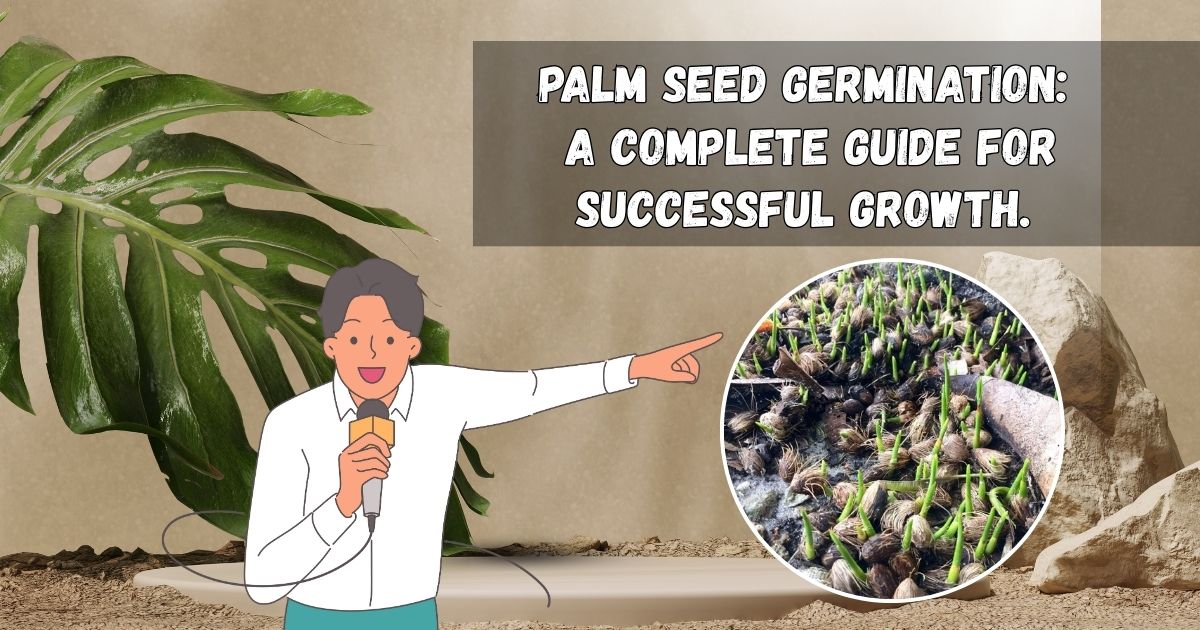
Table of Contents
Understanding Palm Seed Germination.
Palm seeds are unique compared to many other plants because most palm species can only be grown from seeds.
Germination can be slow and uneven; some palm seeds require 70 days or more to sprout, with average germination rates below 20% in nature.
Fresh seeds with mature embryos have higher germination success than old or immature seeds.
Seeds often need to complete embryo development post-harvest before sprouting.
Preparing Palm Seed Germination.
Always use fresh seeds harvested directly from the palm tree rather than seeds collected from the ground to reduce infestation risks.
Remove the fleshy outer layer (pericarp) by soaking seeds in water for several days, changing water daily until the layer softens and can be removed easily.
Avoid chemical treatments like gibberellic acid; soaking seeds helps hydrate and stimulate germination naturally.
Clean the seeds and consider a brief dip in mild fungicide or bleach solution (10%) to prevent disease.
Click on the button below for plants or seeds.
How to Plant Palm Seeds.
- Use a light, well-draining soilless medium, such as a mixture of perlite and peat moss or coconut coir.
- Sow seeds shallowly; burying too deep reduces germination chances. A thin soil layer just covers the seed.
- Space seeds adequately if planting multiple, to ensure proper nutrient access and prevent competition.
Ideal Environmental Conditions.
- Tropical palms generally germinate best at soil temperatures between 27°C to 32°C.
- Desert palms may require slightly warmer conditions, around 34°C to 37°C.
Keep the planting medium moist but not waterlogged; use a spray bottle to mist the soil rather than flooding.
Light is not essential during germination; seeds germinate well in shaded or dark conditions, but after sprouting, seedlings need light to grow healthy.
Maintain high humidity around seeds by covering containers with plastic or placing them in warm, humid places like a bathroom window sill.
Palm Seed Germination Timeline and Tips
Depending on species, palm seeds can take anywhere from a few weeks up to six months to germinate.
Patience is vital as some seeds appear dry or shriveled before they sprout.
Avoid disturbing seeds or seedlings during the initial germination phase.
Higher sanitation and freshness improve germination rates from natural low (20%) up to 90% under optimal conditions.
Troubleshooting Common Issues
Low germination rates may be due to old seeds, improper soaking, temperature extremes, or fungal infections.
Ensure seeds are not buried too deep and soil moisture is consistent without standing water.
Use clean containers and sterile growing medium to avoid disease.
Summary
Successful palm seed germination depends on seed freshness, proper preparation, optimal temperature, moisture management, and patience. Following these proven techniques will help homemakers and growers alike propagate beautiful palms reliably and with higher germination success.
FAQs
Q1: How long does it take for palm seeds to germinate?
A: Palm seed germination varies by species but generally takes between 4 to 12 weeks, sometimes longer for slower types.
Q2: Should palm seeds be soaked before planting?
A: Yes, soaking palm seeds in water for several days helps soften the outer layer and improves germination rates.
Q3: What soil mix is best for germinating palm seeds?
A: A light, well-draining mix like peat moss with perlite or sand works best for palm seed germination.
Q4: What temperature is ideal for palm seed germination?
A: Most palm seeds germinate best at soil temperatures between 27°C to 32°C (80°F to 90°F).
Q5: Can palm seeds germinate in low light?
A: Palm seeds do not require light to germinate but seedlings need bright indirect light once sprouted.
Q6: How to prevent fungal infections during palm seed germination?
A: Use clean containers, sterilized soil, avoid over-watering, and consider a mild fungicide dip before planting.